Comprehensive engineering comparison of EPDM, NBR, and Viton (FKM) elastomers, rubber-to-metal bonding processes, and international tolerance standards for custom rubber molding.
Looking for a professional LSR liquid silicone injection molding supplier in Taiwan? Comprehensive procurement guide covering injection equipment, precision tooling capabilities, ISO 9001 compliance, and overmolding technologies to assist engineering and procurement teams.
Category: Material Selection & Process | Published:
Compare LSR liquid silicone and HCR solid rubber across viscosity, platinum vs. peroxide curing, injection vs. compression molding, tooling costs, and dimensional tolerances to help engineers select the optimal silicone material.
Silicone Hardness Selection Guide: From Shore A 10° to 80° — Which Is Right for Your Application?
Category: Material Knowledge |
Silicone hardness — expressed as Shore A durometer — is one of the most critical design parameters for custom silicone products. From ultra-soft Shore A 10° baby nipples to rigid Shore A 80° industrial gaskets, different hardness levels produce fundamentally different tactile feel, rebound speed, load-bearing capacity and sealing performance. This guide walks you through how to select the right silicone hardness for your application, so you avoid costly re-tooling after discovering a spec mismatch.
When engineers specify a custom silicone part, shore hardness is often treated as an afterthought — chosen by intuition rather than engineering logic. Yet hardness directly governs compression set, dynamic fatigue life, contact sealing force, and even the acoustic signature of a keypad click. Getting it wrong typically means expensive mold rework or, worse, a field failure. This guide demystifies Shore A durometer for silicone rubber, giving you a practical framework to specify the right hardness the first time.
1. What Is Shore A Durometer and How Is It Measured?
Shore A durometer is the standardized measurement of indentation hardness for soft elastomers, defined by ASTM D2240 and ISO 868. The test presses a truncated cone indenter (1.79 mm tip diameter) into the material surface under a 822 g spring load for 15 seconds. The penetration depth is converted to a 0–100 scale — higher numbers mean harder material. For silicone rubber, the useful engineering range spans roughly Shore A 10° to Shore A 80°; anything softer than 10° is gel-like, and materials harder than 80° typically transition into rigid thermosets.
Key measurement conditions that can shift your readings by 3–5 Shore A points: specimen thickness must be ≥6 mm (stack thin sheets if needed), ambient temperature should be 23 ± 2°C, and readings should be taken at least 12 mm from any edge. Always specify tolerances — ±5 Shore A is typical for compression-molded silicone; ±3 Shore A is achievable with tight process control.
2. Hardness Range Reference Table
The table below maps Shore A ranges to common silicone product families. Use it as a starting framework — consult your material engineer to verify suitability for your specific load, chemical environment, and temperature range.
Sealing Pressure: A softer compound (Shore A 30°–50°) requires less clamping force to achieve a gas-tight seal, reducing bolt loading on thin-walled housings. However, higher system pressure demands higher hardness (Shore A 60°–70°) to resist extrusion under the pressure differential. Match hardness to your working pressure and groove geometry using the O-ring extrusion chart from Parker or Apple Rubber.
Dynamic vs. Static Applications: Static seals can use softer compounds that maximize contact area. Dynamic reciprocating or rotating seals must balance friction, wear resistance and compliance — typically Shore A 50°–65° for reciprocating, and Shore A 60°–75° for rotary shaft applications where abrasion is a concern.
Mating Part Clearance and Surface Finish: For over-molded or press-fit seals, the harder the silicone, the greater the interference force required for assembly. Ultra-soft compounds (Shore A 10°–20°) are extremely sensitive to surface scratches and irregular clearances. Verify your mating plastic or metal Ra surface finish against the silicone hardness spec.
Operating Temperature: Silicone rubber retains flexibility across –60°C to +230°C, but hardness shifts with temperature. A Shore A 50° compound at 23°C may read effectively Shore A 35° at 150°C and Shore A 65° at –30°C. For extreme-temperature applications, model the expected hardness shift to ensure your seal will still engage at both ends of the thermal cycle.
4. Jun-Hsiang's Available Hardness Range & Customization
Jun-Hsiang Enterprise stocks and compounds silicone rubber across the full Shore A 10° to 80° spectrum. Our in-house mixing lab can formulate custom Shore A targets in 5-degree increments with tolerances as tight as ±3 Shore A. We support:
Standard HTV (High-Temperature Vulcanization) silicone in all common hardnesses
LSR (Liquid Silicone Rubber) two-part formulations for Shore A 20°–60° range
Specialty compounds: medical-grade, food-grade, electrically conductive, and low-compression-set grades
Dual-hardness co-molding for products that need a hard structural core bonded to a soft sealing lip
Before finalizing your drawing, our engineering team will review your application parameters — sealing pressure, dynamic cycle count, temperature range, and mating material — and recommend the optimal hardness grade with supporting data.
Ready to specify your silicone hardness?Contact our engineering team with your application details for a free technical consultation and quotation.
Need High-Quality Custom Silicone & Rubber OEM Services?
Jun-Hsiang Industrial Co., Ltd. has over 30 years of OEM/ODM experience, providing solid compression molding, LSR liquid injection molding, and multi-material overmolding. We are ISO 9001 certified.
Food-Grade Silicone Certification Guide: What's the Difference Between FDA, LFGB, and SGS?
Category: Material Knowledge |
Food-grade silicone is widely used in baking molds, baby products, bottle seals and kitchenware. But "food-grade" is often misused — not every product claiming this label has actually passed rigorous international certification. This guide breaks down the differences between FDA (USA), LFGB (EU/Germany), EC 1935/2004 and SGS third-party testing, helping you specify and source silicone components that truly comply with food contact regulations.
Walk into any kitchenware trade show and you will see hundreds of booths claiming their silicone baking mats, spatulas, and baby bottle nipples are "FDA certified" or "LFGB approved." In reality, these certifications are far more nuanced than a simple pass/fail stamp — and the difference matters enormously if you are a brand manager, product engineer, or procurement specialist responsible for market access in North America, Europe, or Asia. This guide gives you the technical grounding to distinguish genuine food-contact compliance from marketing noise.
1. FDA 21 CFR 177.2600 — The US Standard
The US Food and Drug Administration regulates food-contact materials under the Code of Federal Regulations Title 21. For silicone rubber, the critical regulation is 21 CFR 177.2600, which covers "Rubber articles intended for repeated use" in contact with food. To comply, the silicone compound must:
Be composed only from FDA-listed ingredients (base polymers, crosslinkers, fillers, catalysts, colorants)
Pass total extractable limits for chloroform-soluble, n-hexane-soluble, and aqueous-phase extractables
Pass a color additive test if pigments are used
Note that FDA compliance is self-declared — the FDA does not issue certificates. A supplier claiming "FDA certified" is technically using imprecise language. The correct statement is "formulated to comply with FDA 21 CFR 177.2600," backed by third-party extractables testing from an accredited laboratory.
2. LFGB §30/§31 — The German/EU Standard
The German Food and Feed Code (Lebensmittel- und Futtermittelgesetzbuch, LFGB) Sections 30 and 31 govern food-contact articles sold in Germany and, by extension, are widely adopted across the European Union as a de facto premium standard. LFGB testing is significantly more stringent than FDA in several respects:
Sensory testing: The silicone part must not impart odor or taste to food simulants (water, 3% acetic acid, 15% ethanol, olive oil) at elevated temperatures.
Migration limits: Primary aromatic amines (PAA), heavy metals, and specific volatile siloxanes (especially D4 and D5 cyclic siloxanes) are tested against strict migration limits.
Peroxide crosslinker residuals: Products crosslinked with peroxide must pass additional extractables tests for decomposition residues.
LFGB certification IS issued by accredited test institutes (e.g., SGS, TÜV, Intertek), making it a verifiable, third-party document — a meaningful differentiator for European market access.
3. EC Regulation 1935/2004 — The EU Framework
EC 1935/2004 is the overarching European Union regulation for all food-contact materials. It establishes the general safety principle: materials must not transfer their constituents to food in quantities that could endanger human health, bring about unacceptable changes in composition, or impair flavor/odor. Unlike LFGB, EC 1935/2004 does not specify test methods for silicone — it relies on implementing measures (such as the plastic regulation EU 10/2011) or, for silicone specifically, member-state regulations like LFGB. Demonstrating EC 1935/2004 compliance typically requires a Declaration of Compliance (DoC) supported by appropriate migration testing.
4. SGS and Third-Party Testing — What to Ask For
SGS, Bureau Veritas, Intertek, and TÜV Rheinland are the major accredited laboratories that issue food-contact test reports. When evaluating a silicone supplier, ask for:
Full test report (not just the summary page) issued by an accredited lab — verify the accreditation number
Scope of testing: which food simulants were used, at what temperature and duration
Compound identification: the test should reference the exact compound formulation/batch, not a generic material family
Date of testing: food-contact reports are typically valid for 2–3 years; request a re-test for older compounds
5. How to Identify Genuine Food-Grade Silicone
A simple field test: perform the "pinch test" — stretch and twist the silicone sharply. If white filler (typically calcium carbonate or titanium dioxide, common in low-cost non-silicone TPE knockoffs) appears through the stretched area, the material is likely not pure silicone. Genuine food-grade silicone should remain translucent or maintain its original color throughout. However, the only reliable verification method is laboratory chemical analysis and a traceable Certificate of Conformance from the compounder.
6. Jun-Hsiang's Food-Grade Silicone Capabilities
Jun-Hsiang maintains food-grade HTV silicone compounds that are formulated to comply with both FDA 21 CFR 177.2600 and LFGB §30/§31. Our compounds are manufactured under segregated processing conditions to prevent cross-contamination with non-food-grade materials. We can provide:
Third-party test reports from SGS or equivalent accredited laboratory upon request
Declaration of Compliance for EC 1935/2004 as required for EU market access
Food-grade colorants in a full palette — all pigments selected from FDA/LFGB-compliant approved lists
Production in Shore A 20°–70° to cover baking molds, seals, bottle nipples, and kitchenware components
Sourcing food-contact silicone components?Contact Jun-Hsiang with your product specifications and target market to receive compliance documentation and a competitive quotation.
Need High-Quality Custom Silicone & Rubber OEM Services?
Jun-Hsiang Industrial Co., Ltd. has over 30 years of OEM/ODM experience, providing solid compression molding, LSR liquid injection molding, and multi-material overmolding. We are ISO 9001 certified.
Custom Silicone O-Ring & Seal Manufacturing: Complete Step-by-Step Process from Drawing to Mass Production
Category: Design Guide |
Silicone O-rings are among the most common components in industrial sealing systems, used in pneumatic/hydraulic systems, semiconductor equipment, underwater instruments and appliances. While standard sizes (AS568, JIS B2401) are available off-the-shelf, custom tooling becomes necessary when your product has unique dimensions, special materials or tight tolerances. This article walks you through the complete process from CAD drawings to mass production delivery.
Engineers frequently underestimate the engineering depth behind a silicone O-ring. A simple circular cross-section part must maintain a leak-free interface across tens of thousands of pressure cycles, survive aggressive cleaning agents, and fit precisely within a groove machined to ±0.01 mm. When a standard off-the-shelf O-ring doesn't meet your dimensional, material, or hardness requirements, the path to a reliable seal runs through custom tooling and controlled manufacturing. Here is exactly how that process works.
1. When to Go Custom vs. Standard
Standard O-ring sizes (AS568 in the USA; JIS B2401 in Japan; ISO 3601 internationally) cover a wide range of cross-section diameters and inner diameters. Choose custom tooling when:
Your groove dimensions fall between standard sizes, requiring a non-standard inner diameter or cross-section (e.g., 2.2 mm cross-section instead of the standard 1.78 mm or 2.62 mm)
You need a material not available in standard O-ring stock (e.g., high-purity VMQ for semiconductor, FVMQ for low-temperature + fuel resistance, or electrically conductive silicone)
Hardness tolerance is tighter than standard supply (±3 Shore A vs. typical ±5)
You need a non-circular cross-section (D-ring, X-ring/quad ring, or custom profile seal)
Your annual volume justifies tooling cost through per-unit savings and guaranteed material traceability
2. Five-Step Custom O-Ring Process
Step 1 — Drawing Review & Quotation: Submit your 2D drawing or 3D model. Our engineering team verifies groove geometry per ISO 3601-3 (housing/groove design standard), checks compression ratio (typically 15%–30% for static face seals; 10%–20% for radial seals), and flags any risk of extrusion, excessive squeeze, or installation damage. Any concerns are noted together with our quotation before tooling begins.
Step 2 — Tooling Design & Fabrication (7–14 business days): We design a cavity mold in S45C or P20 steel (hardened H13 for long-run precision tooling). Cavity count is optimized for your volume — typically 2+2 to 16+16 cavities. Flash-less mold technology minimizes post-mold trimming, which is critical for clean-room and food-contact applications. Tooling drawings are submitted to you for approval before machining begins.
Step 3 — First Article Sampling & Measurement (3–5 business days post-tooling): We produce a pilot run of 20–50 pieces and perform full dimensional inspection per your drawing: inner diameter (ID), cross-section diameter (CS), and surface finish (Rz). We also perform compression set testing (ASTM D395 Method B at your specified temperature) and hardness verification. A First Article Inspection Report (FAIR) is submitted for your approval.
Step 4 — Customer Approval & Process Lock (2–5 business days): You test the samples in your actual assembly and environment. Upon approval, we lock the process parameters — compound batch, curing time/temperature, press tonnage, and inspection criteria — into a Control Plan. Any future change requires a formal Engineering Change Notice (ECN).
Step 5 — Mass Production & Delivery (lead time per volume): Typical lead times: 10,000–50,000 pcs in 7–10 business days; 100,000–500,000 pcs in 14–21 business days. We ship with a Certificate of Conformance (CoC) and, for traceability-critical customers, individual batch QC data.
3. Required Drawing Parameters
To generate an accurate quotation and tooling design, provide the following on your drawing:
Inner Diameter (ID) with tolerance (e.g., Ø25.00 ±0.13 mm)
Cross-Section Diameter (CS) with tolerance (e.g., Ø3.00 ±0.10 mm)
Material: compound family, any certifications required (FDA, LFGB, USP Class VI)
Hardness: Shore A target ± tolerance
Surface finish: any requirements for smooth bore, post-cure, or PTFE coating
Annual volume and target unit price (helps us optimize cavity count)
4. Material Comparison: Silicone vs. Alternative Elastomers
Material
Temp Range
Best For
Weakness
Silicone (VMQ)
–60°C to +230°C
Wide temp range, food/medical, weathering
Low tensile, poor petroleum resistance
EPDM
–50°C to +150°C
Ozone/UV, steam, water, brake fluid
Poor oil/solvent resistance
NBR
–40°C to +120°C
Petroleum oils, hydraulic fluids
Poor ozone, limited temp range
FKM (Viton)
–20°C to +220°C
Aggressive chemicals, high-temp fuels
High cost, poor low-temp flexibility
5. Jun-Hsiang Custom O-Ring Capabilities
Jun-Hsiang has produced custom silicone O-rings and profile seals for customers across semiconductor equipment, food processing, medical device, and aerospace connector applications. Our capabilities include:
Inner diameter range: Ø2 mm to Ø1,500 mm (very large seals via splice-join process)
Cross-section diameter: 0.8 mm to 20 mm
Hardness: Shore A 20°–80°, tolerance ±3 Shore A
Material options: Standard VMQ, high-purity VMQ (semiconductor grade), FVMQ, EPDM, FKM — all compound options available
Certifications available: FDA, LFGB, USP Class VI, RoHS
Flash-free, post-cured, PTFE-coated options available
Have a custom sealing requirement?Send us your drawing or inquiry and receive a tooling cost estimate. We will reply as soon as possible.
Need High-Quality Custom Silicone & Rubber OEM Services?
Jun-Hsiang Industrial Co., Ltd. has over 30 years of OEM/ODM experience, providing solid compression molding, LSR liquid injection molding, and multi-material overmolding. We are ISO 9001 certified.
Machine vibration not only affects machining precision but can accelerate fastener loosening, base fatigue and even create safety hazards. Selecting the right silicone or rubber anti-vibration feet (vibration isolation mounts) is a critical detail that precision machinery manufacturers cannot overlook. This guide covers load calculations, hardness selection, material comparisons and mounting types for machine anti-vibration feet.
Every piece of production machinery — from CNC machining centers and injection molding presses to precision measurement instruments and semiconductor wafer handlers — generates or experiences vibration that must be managed. Unchecked vibration cascades into thermal growth, positional errors, bearing wear, and structural fatigue. The anti-vibration foot (or leveling mount) is the last line of defense between the machine and the floor. Choosing the wrong one degrades the machine's performance; choosing the right one can extend its service life by years. This guide gives engineers and procurement specialists the technical framework to make that choice correctly.
1. Vibration and Damping Fundamentals — Why Silicone Outperforms Metal Springs
A vibration isolation system works by ensuring the mount's natural frequency (fn) is significantly lower than the disturbing frequency (fd) of the machine. The isolation efficiency improves as the ratio fd/fn increases. Metal coil springs achieve very low natural frequencies (2–5 Hz) but have nearly zero internal damping — they transmit resonant surges and high-frequency structure-borne noise freely. Silicone and natural rubber mounts, by contrast, exhibit:
Internal damping (loss factor δ = 0.05–0.15 for silicone): Energy is dissipated as heat within the polymer matrix rather than transmitted to the structure.
Broad frequency response: Silicone mounts attenuate both low-frequency displacement (10–30 Hz machine harmonics) and high-frequency acoustic noise (100–2000 Hz).
Temperature stability: Silicone maintains consistent stiffness from –50°C to +200°C, unlike natural rubber (which hardens below 0°C) or EPDM (limited at high temperature).
Chemical resistance: Silicone resists cutting oils, coolants, and cleaning solvents common in machine shop environments.
2. Load Calculation Method
Before selecting a mount, calculate the load per foot using this formula:
Load per foot = (Machine weight × Dynamic load factor) / Number of mounting feet
Typical dynamic load factors: 1.5× for smoothly running motors and fans; 2.0× for reciprocating compressors and presses; 2.5–3.0× for impact machinery such as punch presses or drop hammers. Always round up to the next available rated capacity — operating at 80–90% of rated load is best practice to avoid premature creep and compression set.
Example: A 2,000 kg CNC machining center on 4 anti-vibration feet with a dynamic factor of 2.0 requires: (2,000 × 2.0) / 4 = 1,000 kg per foot minimum rated load. Select a mount rated at ≥1,200 kg to maintain the 80% margin.
3. Hardness Selection for Vibration Frequency
Mount hardness governs the stiffness and therefore the system natural frequency. As a general rule:
Low-frequency disturbances (10–30 Hz): Use softer mounts, Shore A 30°–45°. Lower stiffness gives a lower fn, improving isolation at the machine's fundamental frequency and its harmonics.
High-frequency structure-borne noise (100–2000 Hz): Use medium-hardness mounts, Shore A 50°–65°. Higher stiffness provides better load support and prevents excessive deflection that could introduce secondary resonances.
Impact and shock isolation: Shore A 40°–55° with a higher damping formulation; the mount must absorb kinetic energy rapidly without bouncing.
Mixed applications (most production equipment): Shore A 50°–60° is the most common specification, balancing isolation efficiency, load capacity, and service life.
4. Material Comparison for Anti-Vibration Applications
Material
Temp Range
Oil/Coolant Resistance
Damping
Best For
Silicone (VMQ)
–60°C to +200°C
Good (non-petroleum based)
Medium
High/low temp extremes, clean environments
EPDM
–50°C to +150°C
Good (water-based fluids)
Medium-High
Outdoor installations, steam environments
Natural Rubber (NR)
–30°C to +80°C
Poor
High
Cost-sensitive applications, indoor use only
5. Mounting Styles
Anti-vibration mounts come in several mechanical configurations:
Compression (sandwich) type: Rubber pad bonded between two metal plates. Best for pure vertical loads. Easy installation, lowest cost.
Shear type: Rubber in shear mode; provides lower natural frequency for the same hardness. Used where horizontal isolation is also needed.
Leveling feet (conical/cylindrical): Combined leveling bolt and rubber element. Standard for CNC machines; allows height adjustment ±20 mm without removing the machine.
Metal-bonded anti-vibration pad: Silicone rubber vulcanized to a steel insert with threaded studs top and bottom. Highest load capacity; used in heavy presses and generators.
6. Jun-Hsiang Custom Anti-Vibration Pad Capabilities
Jun-Hsiang manufactures custom silicone-to-metal bonded anti-vibration components. Our experience includes pads for semiconductor wafer handling robots, medical imaging tables, precision laser systems, and heavy industrial presses. We offer:
Load range: 50 kg to 5,000 kg per mount
Rubber hardness: Shore A 30°–70°, custom formulations for specific damping ratio targets
Metal insert materials: carbon steel, stainless steel (SUS304/SUS316), aluminum alloy
Testing: compression set, pull-out force, stiffness characterization per ASTM or DIN standards
Need a custom anti-vibration solution?Contact our engineering team with your equipment weight, operating frequency, and environmental conditions for a tailored recommendation.
Need High-Quality Custom Silicone & Rubber OEM Services?
Jun-Hsiang Industrial Co., Ltd. has over 30 years of OEM/ODM experience, providing solid compression molding, LSR liquid injection molding, and multi-material overmolding. We are ISO 9001 certified.
Semiconductor fabs and TFT-LCD/OLED panel plants represent the most demanding application environments for silicone seals. These facilities require components that release zero volatile compounds in high vacuum, high temperature or corrosive gas (HF, Cl₂, O₃) environments, to prevent yield-killing wafer or panel contamination. This article covers the specific requirements at each fab process step and the material selection needed to meet them.
A single contamination particle measuring 0.1 µm on a 300 mm silicon wafer can cause a die failure worth hundreds of dollars. In a leading-edge fab producing advanced logic chips at 3 nm nodes, the economic impact of a yield excursion traced to a contaminating seal can reach millions of dollars per day. This is not an exaggeration — it is the environment in which semiconductor equipment engineers specify their materials. Silicone seals used in this context face a standard of cleanliness and chemical stability that dwarfs any other industry. This article maps those requirements systematically by process area.
1. Fab Process Requirements by Station
Dry Etch (RIE/ICP/CCP) — HF, Cl₂, CF₄, SF₆, O₂ plasma: Seal materials face direct plasma bombardment on exposed surfaces and corrosive gas permeation through the seal body. Standard silicone (VMQ) is attacked by fluorine plasma, losing surface material in a process called "erosion." For fluorine-dominated chemistries, FFKM (perfluoroelastomer, e.g., Kalrez or Perlast) is the benchmark. For chambers with mixed chemistries including oxygen plasma, high-purity VMQ may suffice for secondary seals not directly plasma-exposed.
CVD/ALD (Chemical Vapor Deposition) — SiH₄, NH₃, TiCl₄, TEOS at 200–450°C: The dominant requirement here is high-temperature stability and near-zero outgassing. Seals must not release volatile siloxanes (D3–D6 cyclic oligomers), residual catalysts, or processing aids that could deposit on the wafer surface. High-purity VMQ with post-bake (secondary curing at 200°C for 4+ hours) dramatically reduces volatile extractables.
CMP (Chemical Mechanical Planarization) — Acidic or alkaline slurry + DI water: Seals in CMP equipment face abrasive slurry, pH ranges of 2–12, and continuous wafer-level mechanical action. High tensile strength silicone with good acid/alkali resistance; EPDM can substitute for CMP where temperatures are moderate.
Wet Clean — HF, H₂O₂, SC-1, SC-2 chemistry: Seals must resist concentrated HF (up to 49%) and hydrogen peroxide mixtures. Standard VMQ degrades rapidly in concentrated HF. FFKM is the only fully HF-compatible elastomer. For dilute HF applications, high-purity VMQ with a fluorocarbon surface treatment may extend service life.
2. Low Outgassing and Cleanliness Requirements
Outgassing is measured by NASA ASTM E595 standard: Total Mass Loss (TML) must be <1.0% and Collected Volatile Condensable Materials (CVCM) must be <0.10% after 24 hours at 125°C in vacuum. For semiconductor-grade seals, even stricter internal specifications are common — some equipment OEMs require TML <0.3% and CVCM <0.02%.
Key techniques to reduce outgassing in silicone seals:
Post-cure (secondary vulcanization): Baking at 200°C for 4–8 hours in a circulating-air oven drives off residual peroxide decomposition products, low-molecular-weight cyclic siloxanes, and processing aids. This single step can reduce volatile extractables by 90%.
High-purity base polymer: Specify VMQ compounds produced from ultra-high-purity polydimethylsiloxane with ion content (Na+, K+, Cl–) <1 ppm to prevent ion migration in gate dielectric layers.
Clean-room molding: Parts should be molded, post-cured, inspected, and packaged in a controlled environment (ISO Class 6 or better) to prevent particulate contamination before installation.
Flat panel display (FPD) fabs face similar contamination challenges to semiconductor fabs, but at much larger substrate scales (Gen 8+: 2,200 × 2,500 mm). Key silicone seal applications include:
Vacuum chuck pads and edge exclusion seals: Hold large glass substrates flat during CVD and photolithography. Must be soft (Shore A 20°–35°) for intimate contact with glass without marking, and must outgas minimally under process vacuum (<10⁻³ Torr).
Glass transfer robot arm seals: End-effector suction seals that cycle thousands of times per day. Must resist vacuum fatigue and maintain consistent suction without particulate generation.
Gate valve and chamber door seals: Must seal against process gases (SiH₄, NH₃) at temperatures up to 250°C. High-purity VMQ post-baked to <0.3% TML is the standard specification.
5. Jun-Hsiang Semiconductor-Related Capabilities
Jun-Hsiang has supplied silicone sealing components to equipment manufacturers serving Taiwan's semiconductor and FPD industry. Our relevant capabilities include:
High-purity VMQ compounds processed in clean-room adjacent environments
Post-bake secondary vulcanization at 200°C/4–8 hr for low-outgassing compliance
Precision molding of O-rings, custom profile seals, and flat gaskets
Cleanroom packaging in anti-static bags with lot traceability
Hardness range Shore A 20°–70° for chuck pads through chamber door seals
Sourcing seals for semiconductor or FPD equipment?Contact our technical team with your application details, operating chemistry, and cleanliness requirements for a material recommendation and quotation.
Need High-Quality Custom Silicone & Rubber OEM Services?
Jun-Hsiang Industrial Co., Ltd. has over 30 years of OEM/ODM experience, providing solid compression molding, LSR liquid injection molding, and multi-material overmolding. We are ISO 9001 certified.
In chemical processing, semiconductor fabrication, aerospace, and automotive fuel systems, seals and rubber tubing must endure extremely harsh conditions. These include high-temperature fuel, strong acids/alkalis, organic solvents, and extreme temperature swings. Under such demanding service conditions, general-purpose silicones or standard rubbers are prone to swelling, hardening, or cracking. To ensure long-term equipment reliability and safety, Fluorocarbon (Viton/FKM) and Fluorosilicone (FVMQ) are the two most critical specialty elastomers. This article provides an in-depth analysis of their chemical resistance, temperature limits, and mechanical strengths to guide engineers in making precise material selections.
In industrial precision protection and sealing applications, a material's chemical inertness and thermal limit directly determine the lifespan of components. When common seal materials like nitrile rubber (NBR) or standard silicone fail due to swelling upon contact with strong solvents or fuels, specialty fluoroelastomers become the only viable solution. While both Fluorocarbon (Viton/FKM) and Fluorosilicone (FVMQ) contain fluorine atoms, their physical properties and application scenarios differ significantly due to different backbone structures. Below is an in-depth comparison of these two specialty materials:
1. Fluorocarbon Rubber (Viton / FKM): The Shielding Standard for High Temperatures and Strong Corrosives
Viton (FKM) is a saturated carbon-chain elastomer copolymerized from fluorinated monomers:
Chemical & Oil Resistance: FKM exhibits exceptional chemical stability, withstanding most hydrocarbons, diester-based lubricants, strong acids, high-concentration fuels, and organic solvents. Its chemical resistance leads all common rubber materials.
Temperature Limits: Continuous operating temperatures range from -15°C to 220°C (with short-term peaks up to 250°C). It retains high mechanical strength and low compression set at high temperatures.
Limitations: FKM has poor low-temperature elasticity. Below -15°C, it gradually loses flexibility and hardens (brittleness point at -20°C to -30°C), making it unsuitable for extreme cold or high-altitude aerospace applications. Additionally, it has weak resistance to ketones (such as acetone) and low-molecular-weight esters.
2. Fluorosilicone Rubber (FVMQ): The All-Weather Performer Combining Wide Temperature Range and Fuel Resistance
Fluorosilicone (FVMQ) is a copolymer modified by introducing fluorinated alkyl groups into the polysiloxane backbone, combining the advantages of both silicone and FKM:
Chemical & Oil Resistance: Thanks to the protection of the fluorinated side chains, FVMQ offers excellent resistance to non-polar solvents, aviation fuels, lubricants, methanol fuels, and hydraulic fluids, with very low swelling.
Outstanding Temperature Range (-60°C to 200°C): This is the core advantage of FVMQ. It maintains excellent softness and sealing flexibility at extremely low temperatures down to -60°C, while retaining continuous heat resistance up to 200°C.
Limitations: FVMQ has high raw material costs and lower mechanical strength (tensile, tear, and abrasion resistance) compared to Viton (FKM). Thus, it is primarily used in static seals or low-dynamic precision gaskets.
3. Property Comparison Table: EPDM Foam vs. Silicone Foam
Physical Properties / Metrics
Fluorocarbon (Viton / FKM)
Fluorosilicone (FVMQ)
Long-term Operating Temp Range
-15°C ~ 220°C (Short-term 250°C)
-60°C ~ 200°C (Excellent low-temp)
Fuel / Jet Fuel Resistance
Excellent (Low swelling)
Excellent (Low swelling)
Acid / Alkali Resistance
Outstanding
Moderate to Good
Tensile / Tear Strength
High (Great for dynamic seals)
Moderate (Not recommended for high stretching)
Major Applications
Fuel hoses, chemical pumps/valves, semiconductor vacuum chambers
4. Jun-Hsiang Enterprise — Your Custom Special Rubber and Molding Partner
Specialty rubbers like Viton and FVMQ have narrow processing windows and are significantly harder to mold than standard rubbers. Jun-Hsiang Enterprise Co., Ltd. possesses over 30 years of mold engineering and custom formulation experience, providing highly cost-effective manufacturing:
Custom Formulations & Hardness: We support Shore A 50° to 90° hardness adjustments and can customize compounds for specific anti-static or chemical-resistant specs.
Rubber-to-Metal Bonding: Our dedicated metal surface treatment and adhesive application line allows us to bond Viton or FVMQ to metal substrates (stainless steel, brass, aluminum alloys) during molding. The bond strength exceeds the rubber's tensile limit, preventing delamination.
Whether you require prototyping, technical evaluation, or mass production, we provide complete B2B manufacturing services. Share your STEP/IGS files or physical samples with our engineering team for in-depth consultation.
Need High-Quality Custom Silicone & Rubber OEM Services?
Jun-Hsiang Industrial Co., Ltd. has over 30 years of OEM/ODM experience, providing solid compression molding, LSR liquid injection molding, and multi-material overmolding. We are ISO 9001 certified.
As drones (UAVs) experience explosive growth in fields like smart logistics, power grid inspection, and agricultural spraying, the environmental endurance and reliability of hardware components have become critical to overall design. A drone's vibration control, airtight sealing, and structural protection rely heavily on polymer silicone and rubber parts. This guide dives into design criteria including hardness calibration, dampening coefficients, LSR injection, and rubber-to-metal bonding.
In UAV hardware architecture, flight controllers, camera gimbals, and power systems are highly sensitive to high-frequency vibration and moisture. Precision silicone and rubber components, though small, function as the "invisible mechanical shield" that stabilizes flight, prevents water intrusion, and cushions landings. Below is a detailed design guide for silicone and rubber components across three core UAV application areas:
1. Gimbal Camera Dampers & Motor Mount Cushions (Vibration Isolation)
Propellers and motors spinning at high speeds (50Hz–200Hz) cause high-frequency jitter, resulting in the "jello effect" in aerial video.
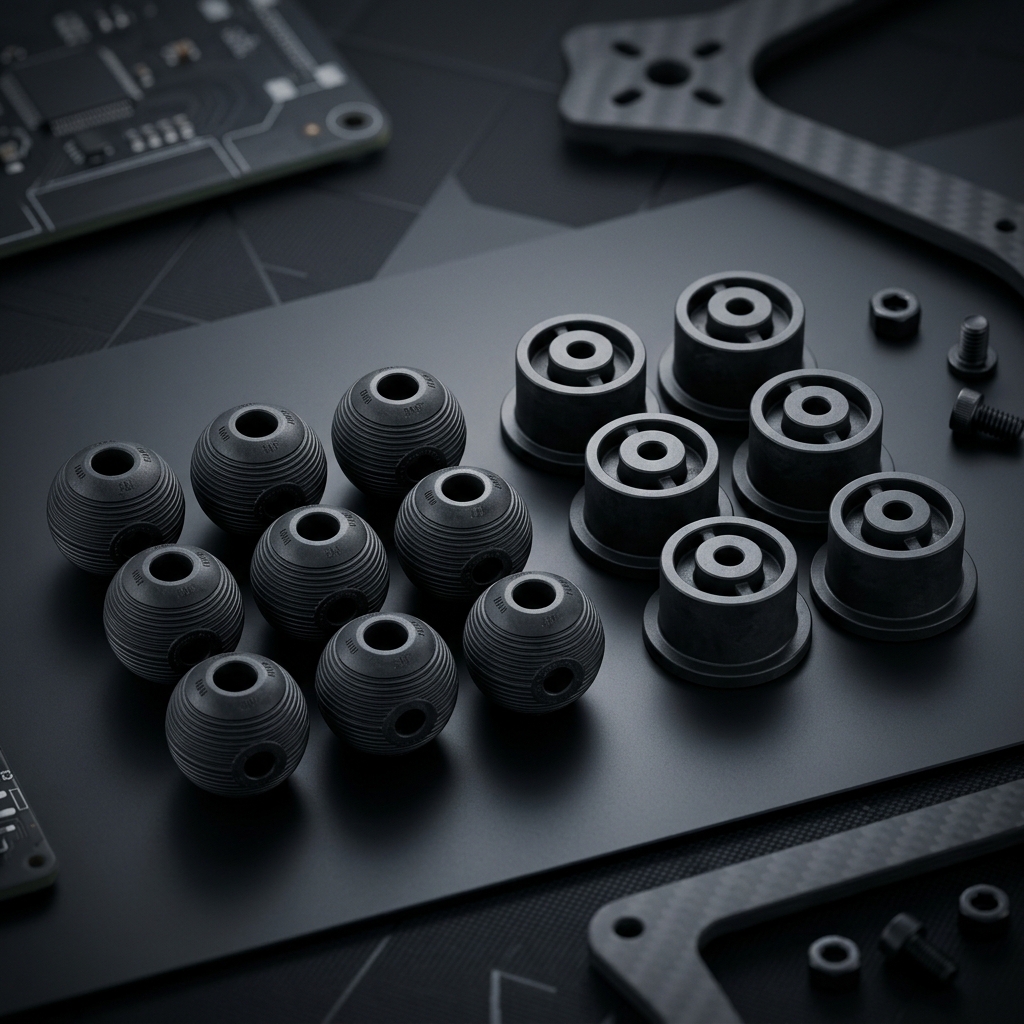
Gimbal Damping Balls: Must be designed with low-hardness (Shore A 30°–45°) high-damping (tan δ) silicone rubber. Its viscoelastic properties absorb micro-vibrations, while the shear and compression rigidity must be mathematically calibrated based on camera payload.
Motor Mount Dampers: We recommend rubber-to-metal bonding. Covalently bonding custom NBR or FKM rubber to aluminum alloy motor mounts eliminates secondary assembly, isolates motor resonance, and prevents gyroscope signal distortion.
▲ Custom high-damping gimbal balls and metal-bonded motor mount dampers by Jun-Hsiang
Industrial and delivery drones require all-weather operation, requiring them to perform under high-altitude freezing temperatures (-40°C or below) and rain.
Waterproof Sealing Rings: Traditional elastomers harden and crack in subzero temperatures. LSR (Liquid Silicone Rubber) injection-molded gaskets provide excellent compression set resistance (< 10%) and thermal stability (-60°C to 250°C), achieving IP67/高規格防水密封 ingress protection.
Servo Dust Boots: For dynamic joints in VTOL tilt-rotor drones, ultra-thin (0.3mm–0.5mm) high-tear silicone bellows protect internal servo gearboxes from rain and dust without adding rotational drag.
Landing Gear Pads: Engineered from high-wear, tear-resistant NBR or Polyurethane (PU) to absorb high impact forces during hard landings, preventing micro-fractures in carbon fiber arms.
Battery Anti-Slip Pads: EPDM rubber provides high weather/UV resistance and maintains a high coefficient of friction under high aerodynamic forces, preventing battery shifts.
UAV Precision Component Materials Comparison:
Part Name
Recommended Material
Hardness (Shore A)
Key Performance Index
Gimbal Dampers
High-Tear Silicone / NR
30°–45°
High damping ratio, high resilience, tear-resistant
Airtight O-Rings
LSR (Liquid Silicone)
50°–65°
Low compression set (<10%), subzero elasticity
Motor Mounts
Oil-Resistant NBR
60°–70°
Bonding strength > 4.5 MPa (covalent metal bonding)
Four. Jun-Hsiang — Your Engineering Partner for High-Reliability UAV Parts
Most UAV dampers and sealing components are custom-engineered. With over 30 years of OEM expertise, Jun-Hsiang Enterprise is equipped with Liquid Silicone Rubber (LSR) injection machines and professional rubber-to-metal bonding lines. We provide an integrated solution—ranging from custom material compounding (low-temp flexibility, high tear strength) to high-precision tooling and rapid prototyping. Let us help your products withstand severe environmental tests and capture opportunities in the global drone market.
Need High-Quality Custom Silicone & Rubber OEM Services?
Jun-Hsiang Industrial Co., Ltd. has over 30 years of OEM/ODM experience, providing solid compression molding, LSR liquid injection molding, and multi-material overmolding. We are ISO 9001 certified.
With the explosive growth of the Artificial Intelligence (AI) server and drone (UAV) industries, hardware requirements for high-temperature thermal dissipation, high-frequency vibration damping, and extreme weatherproofing have reached industrial and aerospace standards. Silicone rubber, with its superior thermal tolerance, shock absorption, and electrical insulation properties, has become an indispensable core precision component in these two frontier industries. This article provides an in-depth analysis...
In the era of rapid development of Artificial Intelligence (AI) and Unmanned Aerial Vehicles (UAV), hardware stability directly determines the performance of algorithms and control systems. Operating in environments characterized by high voltage, high heat, high-speed vibration, and highly variable outdoor weather, high-end precision silicone rubber components play the role of "unsung heroes." Below are the key applications and design trends in these two core areas:
1. Key Applications of Silicone Rubber in AI Servers & Hardware
AI computing chips (such as GPUs and ASICs) release massive amounts of heat under heavy loads, and high-speed cooling systems introduce micro-vibrations, placing strict requirements on hardware sealing and shock absorption:
A. Efficient Thermal Interface Materials (TIM)
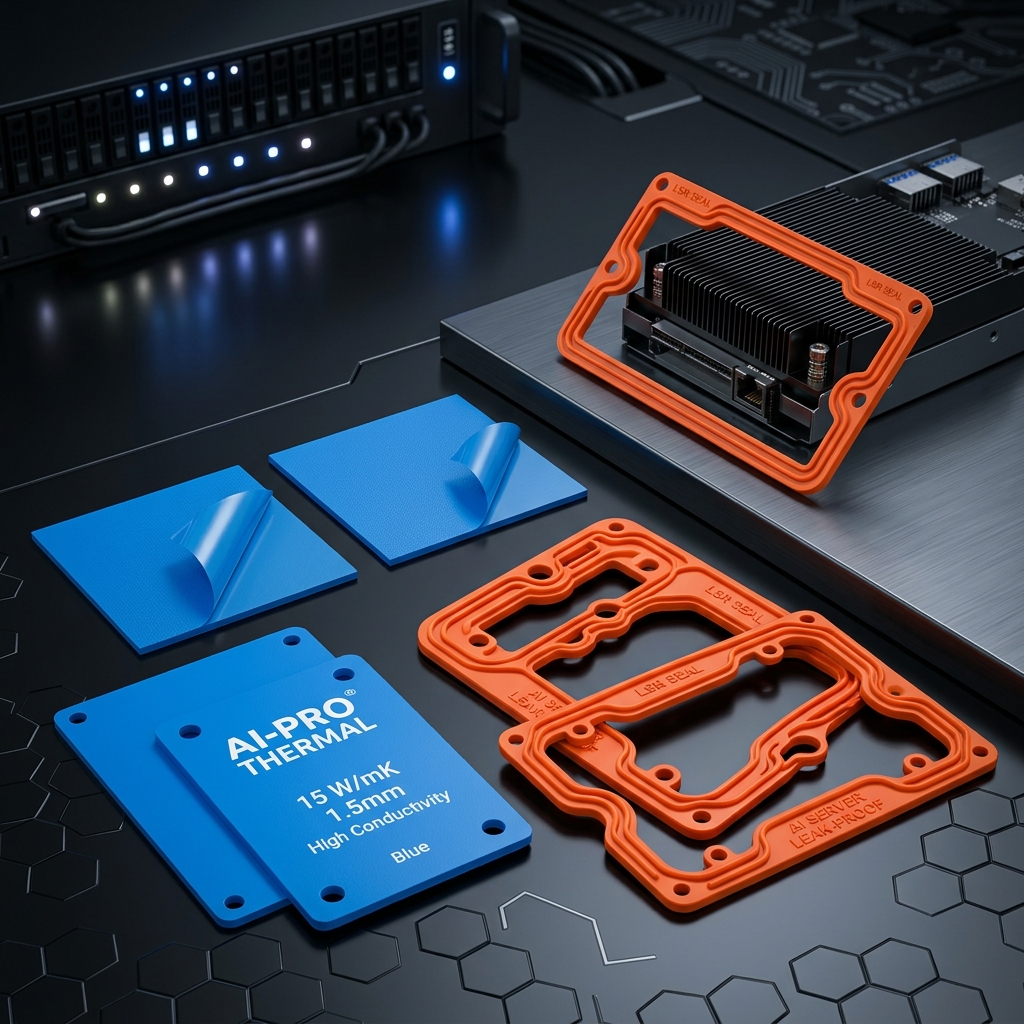
Ultra-high thermal conductivity silicone sheets or thermal gels must be used between AI chips and heat dissipation modules. By adding ceramic powders such as alumina, boron nitride, or silicon carbide, silicone provides excellent heat transfer efficiency (3.0~8.0 W/m·K or higher) while maintaining electrical insulation and soft elasticity (Shore A 10°~25°).
B. Liquid/Water Cooling Leak-Proof Gaskets
To break through heat dissipation bottlenecks, AI cabinets are rapidly shifting to liquid cooling. Gaskets and water-way seals manufactured via LSR (Liquid Silicone Rubber) injection molding possess extremely low compression set (requiring < 10%) and high chemical degradation resistance. They maintain 100% leak-proofing over years of high-temperature cycling, protecting expensive boards from moisture damage.
▲ High-conductivity thermal sheets and high-sealing LSR gaskets produced by Jun-Hsiang
C. EMI Shielding Gaskets
AI servers host numerous high-frequency communication modules where electromagnetic interference (EMI) can severely degrade data rates. We mix conductive particles like nickel-graphite or silver-copper into silicone to produce co-extruded or molded EMI shielding gaskets. These shield high-frequency noise, keeping volume resistivity below 0.01 Ω·cm.
2. Technical Demand of Drones (UAVs) for Precision Silicone Rubber
Drones must withstand high-altitude freezing temperatures, rain wash, and high-speed motor rotation. They are highly sensitive to lightweight construction, shock absorption, and weather resistance:
▲ Drone gimbal dampening balls and metal-bonded motor mount dampers by Jun-Hsiang
A. Gimbal Camera High-Damping Balls
The high-speed rotation of drone propellers causes high-frequency jitter (jello effect). Gimbal dampening balls must utilize silicone rubber with excellent resilience and damping coefficients, with carefully calibrated hardness (typically between Shore A 30° to 45°), to perfectly absorb micro-vibrations and ensure stable aerial photography and inspection footage.
B. Motor Mount Dampers (Rubber-to-Metal Bonding)
A drone's motor mount is the origin of heat and vibration. Utilizing **rubber-to-metal bonding technology**, aluminum alloy inserts are covalently bonded with custom NBR rubber inside the mold. This eliminates secondary assembly, provides high pull-out strength, isolates motor heat, and prevents motor vibrations from interfering with the IMU/gyroscope sensors.
C. Landing Gear Shock Absorbers
Using high-wear, tear-resistant NBR or PU rubber buffers on landing gear feet dampens landing impact forces, preventing micro-fractures in the drone's carbon fiber arms over time.
D. Servo Dust Boots
On the tilt-rotor joints and servo linkages of VTOL drones, ultra-thin (0.3mm~0.5mm) bellows made of high-strength silicone are used. They protect servo gearboxes from agricultural chemical sprays, dust, and rain without adding rotation resistance.
E. IP67/高規格防水密封 Enclosure Seals via LSR Overmolding
For all-weather drones (e.g., patrolling in rain or marine rescue), battery bays and housing joints require robust seals. **LSR double-shot overmolding** direct-bonds liquid silicone onto rigid PC/PA plastic frames, offering zero assembly tolerances and preventing peel-off or leakage from -40°C to 85°C.
Material Specification Guide for AI & Drone Applications:
Component
Material
Core Spec Guideline
Key Process
Chip Thermal Pad
Ceramic-filled Silicone
3~8 W/m·K, Shore A 15°
Mixing Extrusion / Die-cut
Liquid Cooling Gasket
LSR Liquid Silicone
Compression Set < 10%, Coolant Res.
Automated LSR Injection
Gimbal Dampening Ball
High-Tear Silicone
High tan δ damping, Shore A 35°
Compression Molding / LSR
Waterproof Connector
LSR + PC/PA Plastic
高規格防水密封, Bond Strength > 4.0 MPa
Insert LSR Overmolding
3. Jun-Hsiang — Your Trusted Partner for Next-Gen Hardware Manufacturing
Most precision silicone components for AI and drone projects require custom tooling. Jun-Hsiang Enterprise Co., Ltd. possesses over 30 years of mold engineering and material modification experience. At our plant in New Taipei City, we offer complete NRE services, from formulation adjustments to LSR injection molding. Bring your STEP/IGS files or physical samples to our technical team for custom prototypes and high-yield mass production.
Need High-Quality Custom Silicone & Rubber OEM Services?
Jun-Hsiang Industrial Co., Ltd. has over 30 years of OEM/ODM experience, providing solid compression molding, LSR liquid injection molding, and multi-material overmolding. We are ISO 9001 certified.
Many engineers and buyers face the choice between traditional solid compression molding and liquid silicone rubber (LSR) injection molding when looking for a silicone OEM factory to develop new products. These two processes differ significantly in tooling costs, precision, and production volume suitability. This article provides an in-depth comparison...
When developing silicone rubber products, choosing the correct molding process not only affects product quality but also directly determines tooling budgets and long-term production costs. Below is an in-depth analysis of the differences between traditional solid compression molding and modern automated liquid silicone injection:
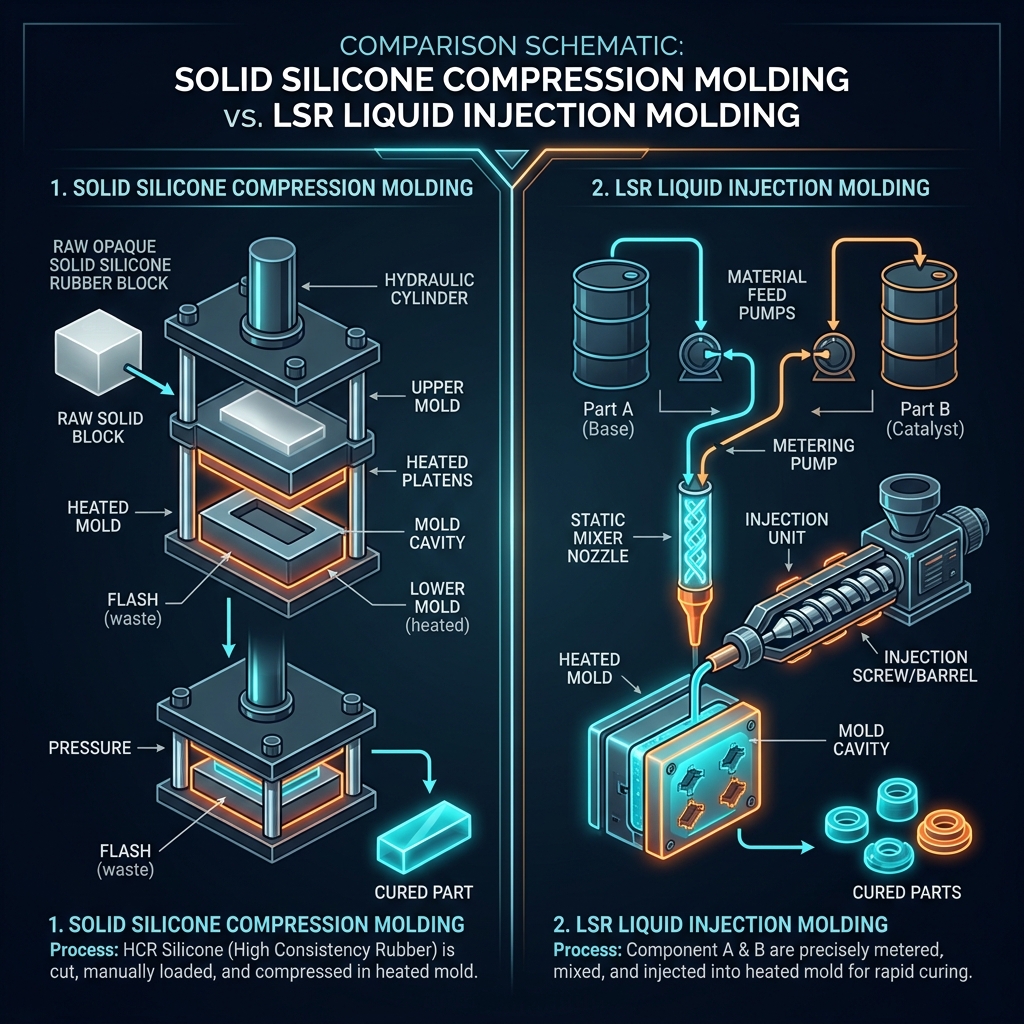
1. Solid Silicone Vacuum Compression Molding
This is a long-standing, mature molding method using pre-mixed solid silicone compound (clay-like texture).
Production Process: The raw compound is cut and weighed, then manually placed into preheated steel mold cavities. A hydraulic press closes to apply high temperature and pressure, curing and vulcanizing the silicone within the mold.
Advantages: The difficulty of mold development and precision requirements are relatively low, making initial tooling costs more economical. It is highly suitable for low-to-medium volume production, especially for larger, simpler silicone components (such as anti-vibration rubber pads, seals, and large protective covers).
Disadvantages: Manual material weighing and placement limit production efficiency. It results in thicker flash, with dimensional tolerances depending on mold and part design, making it less suitable for ultra-intricate precision parts.
2. LSR Liquid Silicone Rubber Injection Molding
This is an automated injection process designed to meet the demands of precision polymer products, using two-part (Part A and Part B) low-viscosity liquid silicone.
Production Process: Part A and Part B raw materials are mixed at a precise 1:1 ratio and injected directly into heated closed mold cavities via a precision runner system, curing rapidly in seconds to tens of seconds.
Advantages: Production with extremely short cycle times. Thanks to the excellent flowability of liquid silicone, it can produce ultra-complex, thin-walled, micron-level parts, with with dimensional tolerances controlled to precision levels. The process generates minimal flash, and the fully enclosed piping prevents human/environmental contamination, making it ideal for medical-grade silicone parts and electronic-grade waterproof seals.
Disadvantages: The mold design is highly sophisticated (requiring precise runner control and high vacuum venting), leading to expensive initial tooling costs. High-volume mass production is recommended to achieve optimal tooling depreciation.
▲ Comparison of solid silicone hot pressing and automated LSR injection molding processes
Process Selection Matrix:
Evaluation Metric
Solid Compression Molding
LSR Injection Molding
Tooling Cost
Low to Medium (Economical)
High (Technically Demanding)
Part Unit Cost
Medium (Includes manual labor)
Low
Precision / Tolerance
Depends on mold design
Precision / Micron level
Suitable Volume
Low to Medium (1K - 20K)
High Volume (>10K+)
Need High-Quality Custom Silicone & Rubber OEM Services?
Jun-Hsiang Industrial Co., Ltd. has over 30 years of OEM/ODM experience, providing solid compression molding, LSR liquid injection molding, and multi-material overmolding. We are ISO 9001 certified.
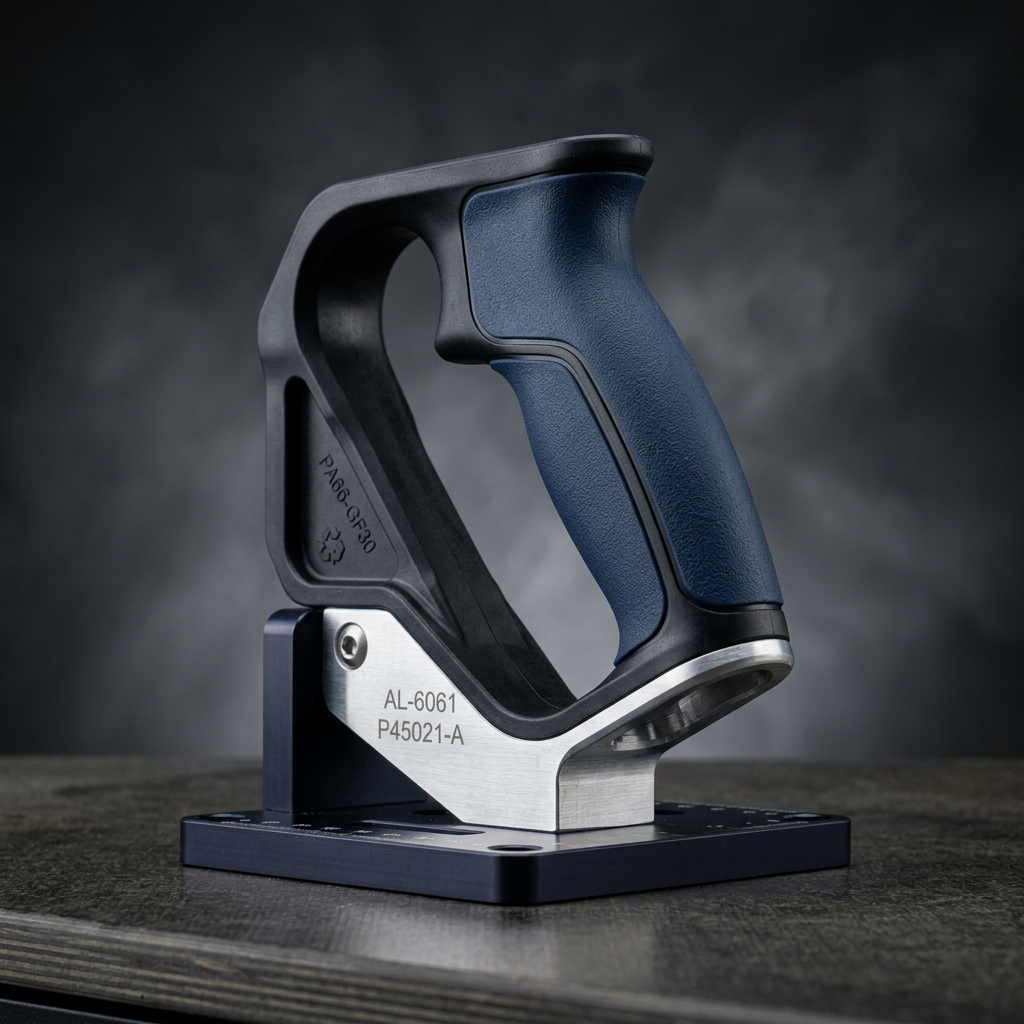
Overmolding (insert molding) is a process of molding flexible silicone directly onto rigid plastic (PC/PA/PBT) or metal substrates (aluminum, stainless steel, copper, iron). Maintaining chemical and physical bonding under various external stresses tests an OEM factory's mold development capabilities...
In designs like waterproof electronic accessories, medical catheter connectors, and automotive dampers, silicone-to-plastic and silicone-to-metal bonding are highly common. This process eliminates post-molding manual assembly and achieves 高規格防水密封 waterproof and dustproof capabilities. Below are the four core steps to ensure a perfect chemical bridge and prevent substrate separation:
▲ Custom silicone overmolded onto metal inserts and rigid plastics produced by Jun-Hsiang
1. Strict Selection of Substrate Temperature Limits
Silicone curing temperatures typically range between 130°C and 175°C. Therefore, when overmolding silicone onto plastic, the rigid plastic substrate must withstand high temperatures, such as PC (polycarbonate), PA+GF (glass-reinforced nylon), PBT, or PEEK. Substrates with lower heat resistance (like ABS or PE) will easily melt or deform inside the mold.
2. Physical Surface Treatment & Activation
A perfect bond relies on a clean surface that allows mechanical interlocking. Before metal inserts (such as stainless steel or copper) are placed in the mold, they must undergo degreasing and oxide removal. Depending on requirements, sandblasting or plasma treatment is applied to increase micro-roughness, allowing the silicone to interlock physically.
3. Uniform Primer Application
This is the key to chemical bonding. Primer molecules possess dual reactive functional groups: one end bonds with the metal (or plastic) surface via intermolecular forces or covalent bonds, while the other end participates in the cross-linking reaction of the silicone during high-temperature curing. The primer thickness and drying temperature must be strictly controlled; too thick creates a brittle layer, while too thin results in weak adhesion.
4. Precision Mold Positioning & High-Pressure Control
During high-pressure injection, flowing silicone exerts a strong force on the metal or plastic inserts. If the mold positioning is inaccurate, the insert can shift by micrometers, leading to uneven wall thickness or exposed substrates. Additionally, the mold must feature efficient vacuum venting to prevent residual air at the bonding interface, which can inhibit the primer's chemical cross-linking.
Jun-Hsiang Enterprise has over 30 years of custom manufacturing experience. In our New Taipei City factory, we feature dedicated surface treatment areas and precision pull-testing equipment, allowing us to deliver the most reliable bonding quality and waterproof guarantees for complex multi-material assemblies.
Need High-Quality Custom Silicone & Rubber OEM Services?
Jun-Hsiang Industrial Co., Ltd. has over 30 years of OEM/ODM experience, providing solid compression molding, LSR liquid injection molding, and multi-material overmolding. We are ISO 9001 certified.
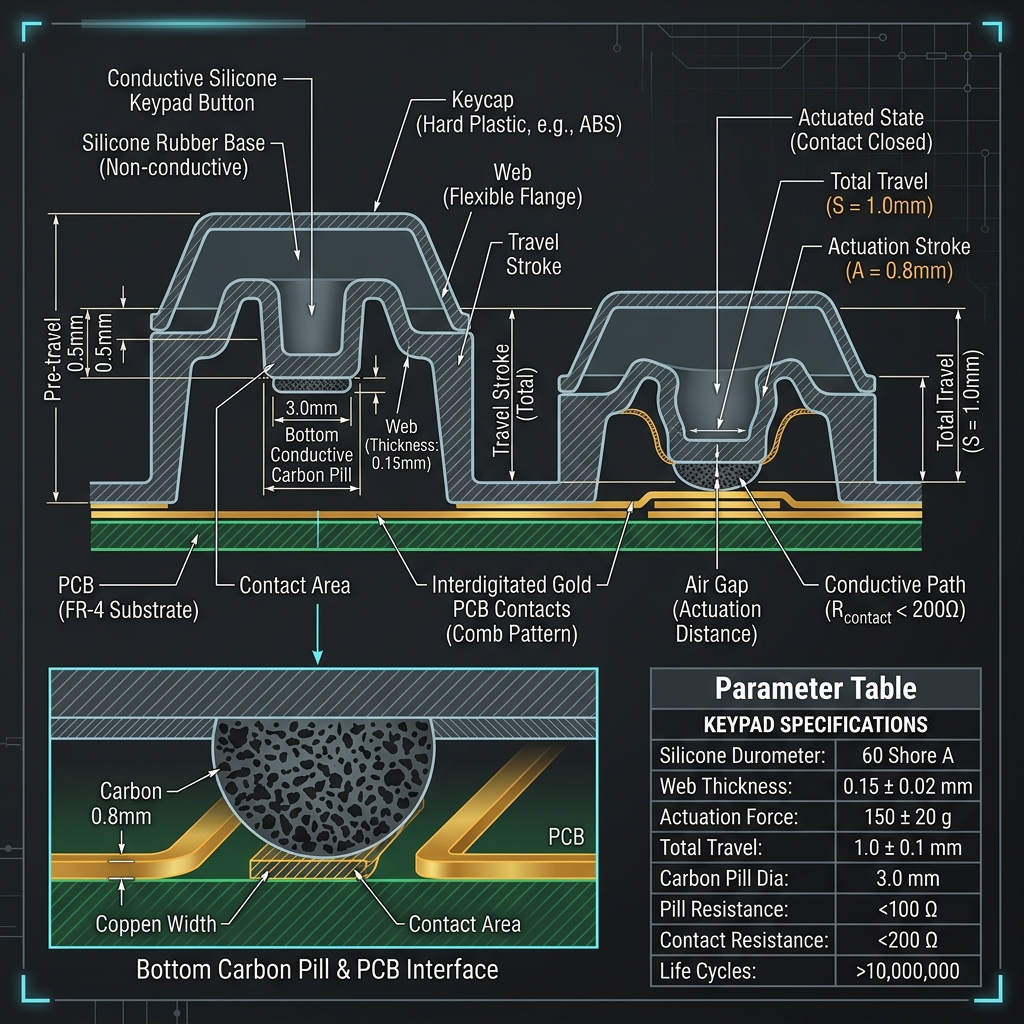
Conductive silicone keypads are widely used in industrial instruments, remote controls, medical devices, and automotive center consoles. To design a keypad with a comfortable feel, crisp feedback, and stable electrical signals, developers must calibrate the tactile force, travel distance, and conductive contacts...
Silicone keypads get their springy, tactile feel from the internal webbing (web) design. A high-quality keypad design requires mastering the following three physical specifications:
1. Actuation Force & Tactile Ratio
The force required to press the key (F1). Consumer electronics (like TV remotes) range from 80g to 120g; industrial, medical, and automotive panels require higher forces (150g to 250g) to prevent accidental activation. The tactile ratio `(F1 - F2) / F1` should be controlled between 40% and 60% to deliver a crisp click; below 30%, it feels mushy.
2. Travel & Pre-travel
Standard keypads have a travel distance of 1.0mm to 2.0mm. Short travel distances respond quickly, but if too short (<0.8mm), feedback is hard to perceive; excessively long travel increases finger fatigue.
3. Material Options for Conductive Contacts
Carbon Pills (resistance 100-150 ohms) are the most cost-effective and durable solution; Metal Pills (Gold/Silver) (resistance <10 ohms) are used for low-latency, high-precision signals; Conductive Ink is ideal for low-profile keypad designs.
▲ Section diagram showing travel, pre-travel, webbing (web), and bottom contact of a silicone keypad
Jun-Hsiang Enterprise possesses over 30 years of precision mold development capability, offering one-stop tooling services to help you calibrate webbing thickness for the perfect tactile feedback. Our factory is located on Xinshu Road in Xinzhuang, and we welcome you to provide drawings for technical discussion.
Need High-Quality Custom Silicone & Rubber OEM Services?
Jun-Hsiang Industrial Co., Ltd. has over 30 years of OEM/ODM experience, providing solid compression molding, LSR liquid injection molding, and multi-material overmolding. We are ISO 9001 certified.
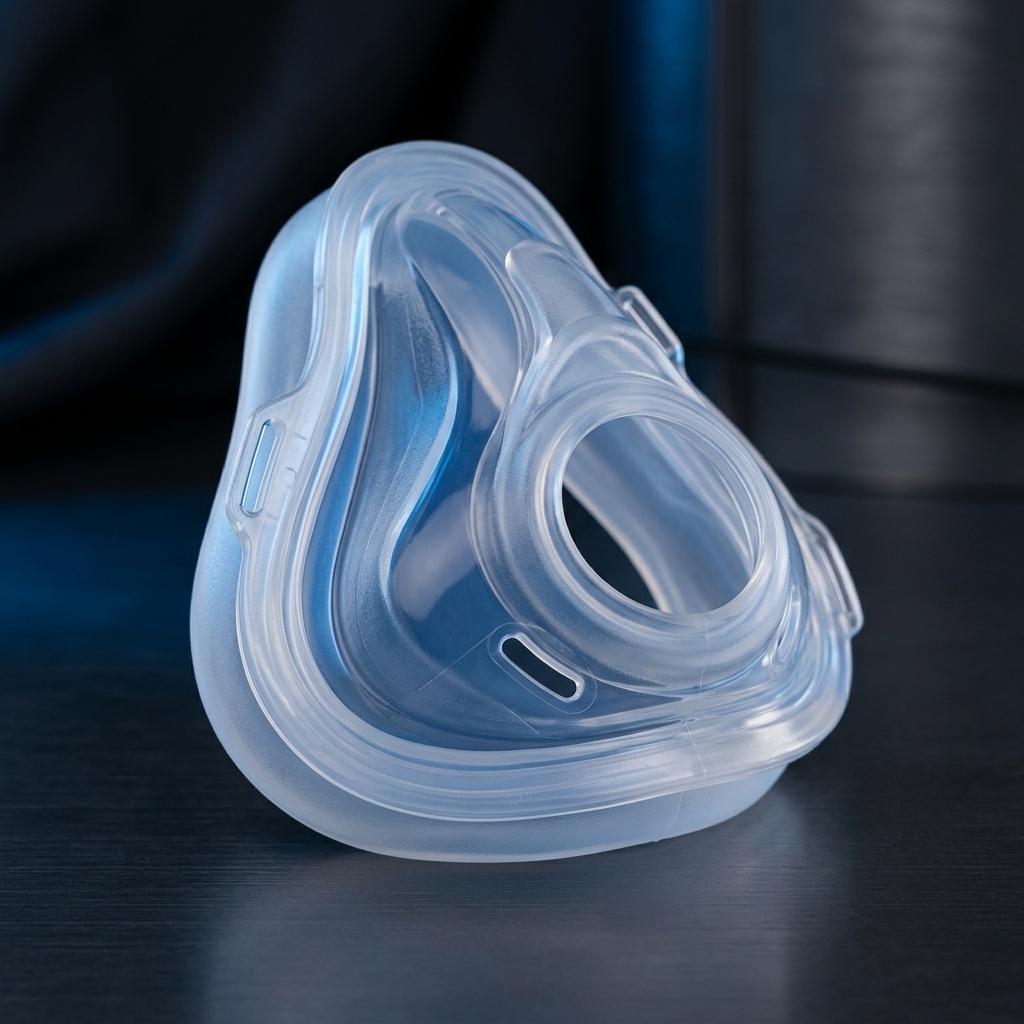
Medical Grade LSR Liquid Silicone Breathing Mask Parts: High Quality & Precision Mass Production
Category: Medical Device Silicone OEM | Published: 2026-06-24
A well-known Taiwanese respiratory medical device manufacturer commissioned us to produce silicone cushions for their new sleeping masks. Requirements: Must comply with FDA food-grade and ISO 10993 biocompatibility standards, with flash strictly controlled to minimal levels, and zero human oil contamination during manufacturing...
▲ Medical-grade clean, biocompatibility-tested LSR breathing mask cushion produced by Jun-Hsiang
【Technical Challenges】
The breathing mask maintains long-term skin contact and must not release volatile organic compounds during sterilization. Traditional compression molding, with its manual weighing and placement, is prone to dust or operator fingerprint oils. In addition, the complex 3D facial contouring demanded extremely high precision along the mold parting line; any tiny flash would cause user discomfort.
【Jun-Hsiang's Solutions】
Using a fully closed dual-component metering system, raw materials are pumped directly from sealed drums at a 1:1 ratio into the injection unit. The entire process prevents air exposure and human contact, ensuring 100% contamination-free production. We designed a mold with micro-precision parting lines and venting systems, strictly controlling injection parameters to keep flash to an absolute minimum. We assisted the client in optimizing curing times and post-curing temperatures to eliminate volatiles, ensuring compliance with FDA 21 CFR 177.2600.
【Mass Production Benefits】
By implementing automated LSR injection, the cycle time per part was reduced from 120 seconds to just 25 seconds, boosting capacity by 380%. The finished product yield reached 99.7%, helping the client capture global medical accessory market share.
Need High-Quality Custom Silicone & Rubber OEM Services?
Jun-Hsiang Industrial Co., Ltd. has over 30 years of OEM/ODM experience, providing solid compression molding, LSR liquid injection molding, and multi-material overmolding. We are ISO 9001 certified.
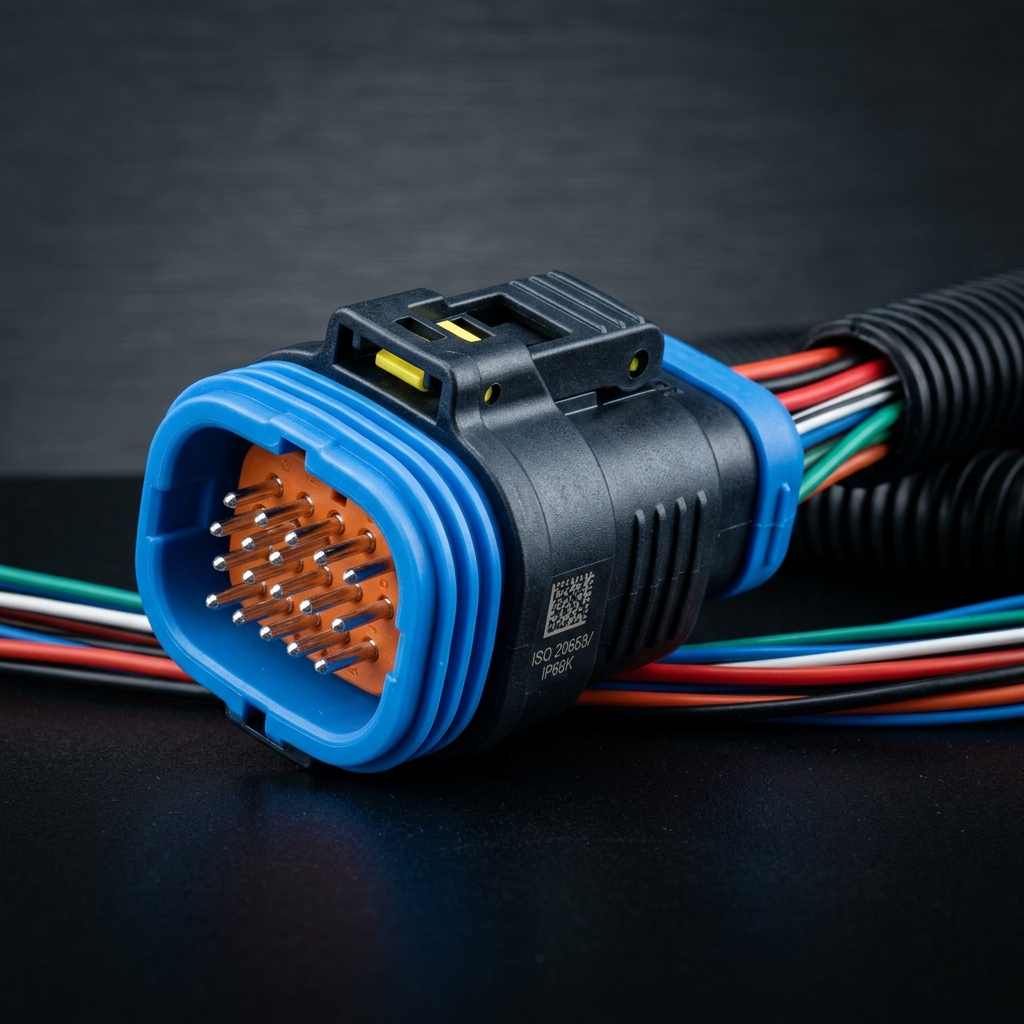
A Tier 1 European/American automotive parts supplier needed to mold a soft liquid silicone seal directly onto a rigid PA66 plastic connector housing. The product had to pass the IP69K high-temperature and high-pressure water jet test and maintain stable adhesion through temperature cycling from -40°C to 150°C...
【Technical Challenges】
High-frequency vehicle vibrations often caused the manually installed O-ring to slip, leading to leakage and short circuits. Thus, the client chose to implement plastic-to-silicone overmolding. The challenge was that the bonding interface was very narrow, requiring tight adhesion without delamination under high injection pressures.
【Jun-Hsiang's Solutions】
We injected the PA66 frame in the first station, and then a robotic arm precisely located the frame into the second LSR injection mold cavity, holding high positioning precision to prevent flash. We tested and selected a specialty self-adhesive LSR that bonds chemically with PA66, eliminating the primer step. We designed custom mold cavity venting and gating configurations to ensure optimal molecular cross-linking at the polymer-silicone interface, maintaining shear strengths >4.5 MPa after thermal cycling.
【Mass Production Benefits】
Successfully passed the automotive OEM's IP69K waterproof standard and vibration tests. This eliminated post-mold manual assembly costs and increased sealing reliability to 100%.
Need High-Quality Custom Silicone & Rubber OEM Services?
Jun-Hsiang Industrial Co., Ltd. has over 30 years of OEM/ODM experience, providing solid compression molding, LSR liquid injection molding, and multi-material overmolding. We are ISO 9001 certified.
Category: Heavy Industrial Anti-Vibration | Published: 2026-06-24
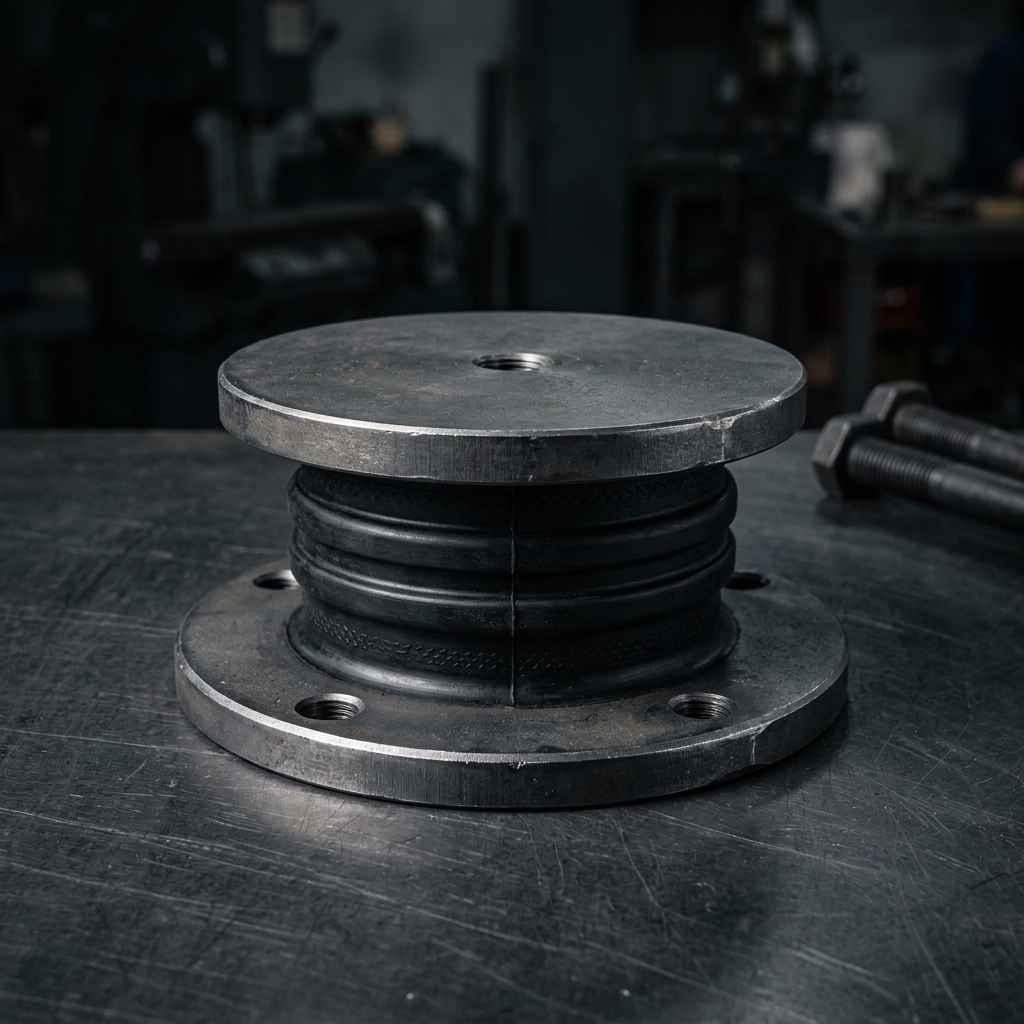
A major heavy machinery manufacturer commissioned us to develop an anti-vibration mount. The core structure featured a heavy steel insert overmolded with high-damping silicone rubber. The product had to support loads over 500 kg without the rubber separating from the metal core under high-frequency vibration...
▲ Industrial heavy machinery vibration isolation mount with high-bond rubber-to-metal vulcanization
【Technical Challenges】
The heavy steel cores had a large thermal mass and a different heat transfer rate than silicone, causing uneven curing inside the mold. Additionally, high-frequency machine vibration subjected the bonding interface to high dynamic shear forces. Traditional compression molding often resulted in rubber-metal separation, ruining the damping effect.
【Jun-Hsiang's Solutions】
We subjected the steel inserts to high-pressure blasting using 80-grit abrasive media, roughening the metal surface, and did a chemical wash to remove oils. In a dust-controlled room, we applied a specialty primer, keeping thickness within 5 to 10 microns, to form covalent bonds with metal hydroxyl groups. We utilized vacuum compression presses to remove air from the mold cavity, preventing void formation at the interface, followed by a 4-hour post-curing cycle.
【Mass Production Benefits】
The anti-vibration pads successfully passed 200,000 compression cycles under heavy load. In pull tests, the rubber itself failed (cohesive failure), demonstrating that the bond strength at the metal-silicone interface exceeded the rubber's own tensile limit.
Need High-Quality Custom Silicone & Rubber OEM Services?
Jun-Hsiang Industrial Co., Ltd. has over 30 years of OEM/ODM experience, providing solid compression molding, LSR liquid injection molding, and multi-material overmolding. We are ISO 9001 certified.
Want to discuss your product manufacturing in detail?
We have over 30 years of mold development and silicone/rubber molding experience in Xinzhuang, backed by ISO 9001 certification. We are ready to provide you with the most reliable technical solutions.