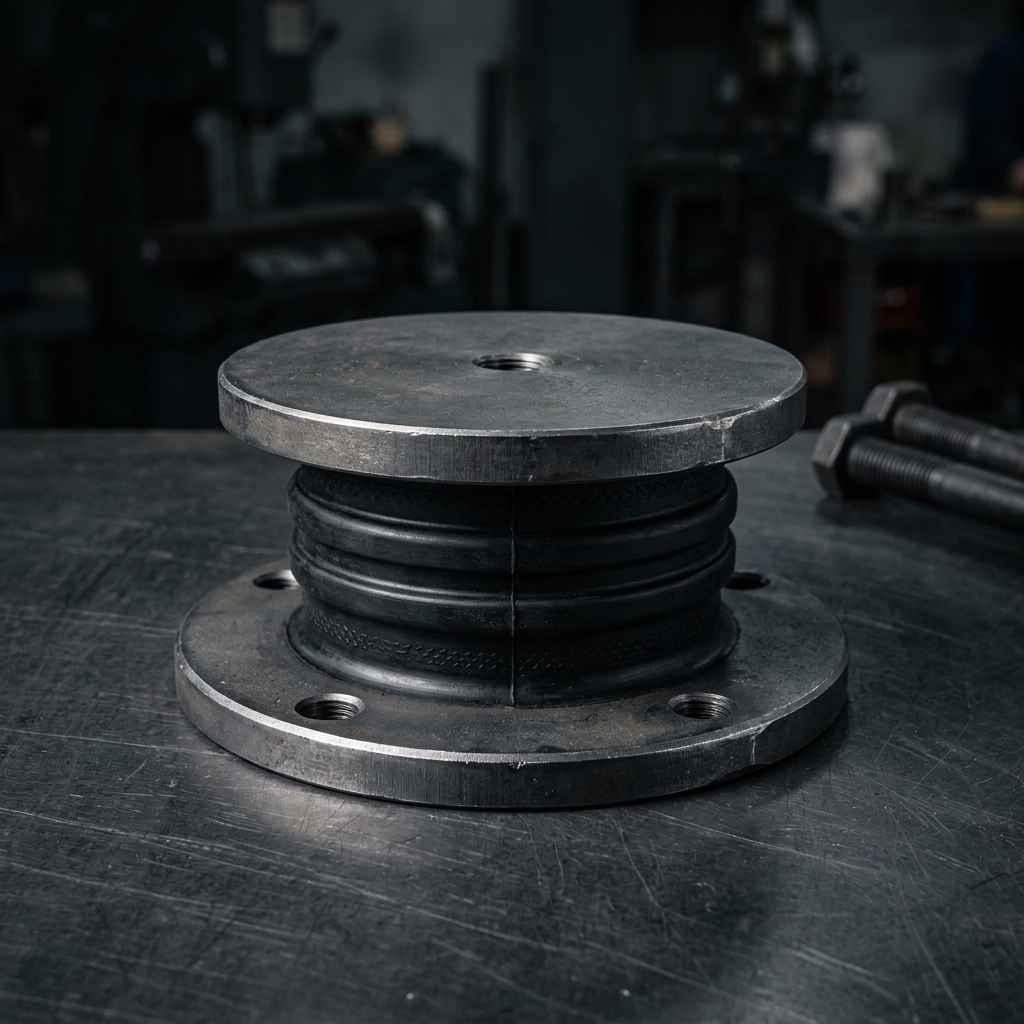
▲ Industrial heavy machinery vibration isolation mount with high-bond rubber-to-metal vulcanization
【Technical Challenges】
The heavy steel cores had a large thermal mass and a different heat transfer rate than silicone, causing uneven curing inside the mold. Additionally, high-frequency machine vibration subjected the bonding interface to high dynamic shear forces. Traditional compression molding often resulted in rubber-metal separation, ruining the damping effect.
【Jun-Hsiang's Solutions】
We subjected the steel inserts to high-pressure blasting using 80-grit abrasive media, roughening the metal surface, and did a chemical wash to remove oils. In a dust-controlled room, we applied a specialty primer, keeping thickness within 5 to 10 microns, to form covalent bonds with metal hydroxyl groups. We utilized vacuum compression presses to remove air from the mold cavity, preventing void formation at the interface, followed by a 4-hour post-curing cycle.
【Mass Production Benefits】
The anti-vibration pads successfully passed 200,000 compression cycles under heavy load. In pull tests, the rubber itself failed (cohesive failure), demonstrating that the bond strength at the metal-silicone interface exceeded the rubber's own tensile limit.
Submit 2D/3D CAD Drawings for Quotation
Have a custom silicone or rubber project? Submit your 2D/3D CAD drawings (.STEP, .IGES, .DWG, .PDF) directly via email for evaluation and quotation. We execute mutual Non-Disclosure Agreements (NDA) prior to reviewing any proprietary engineering drawings.