In designs like waterproof electronic accessories, medical catheter connectors, and automotive dampers, silicone-to-plastic and silicone-to-metal bonding are highly common. This process eliminates post-molding manual assembly and achieves 高規格防水密封 waterproof and dustproof capabilities. Below are the four core steps to ensure a perfect chemical bridge and prevent substrate separation:
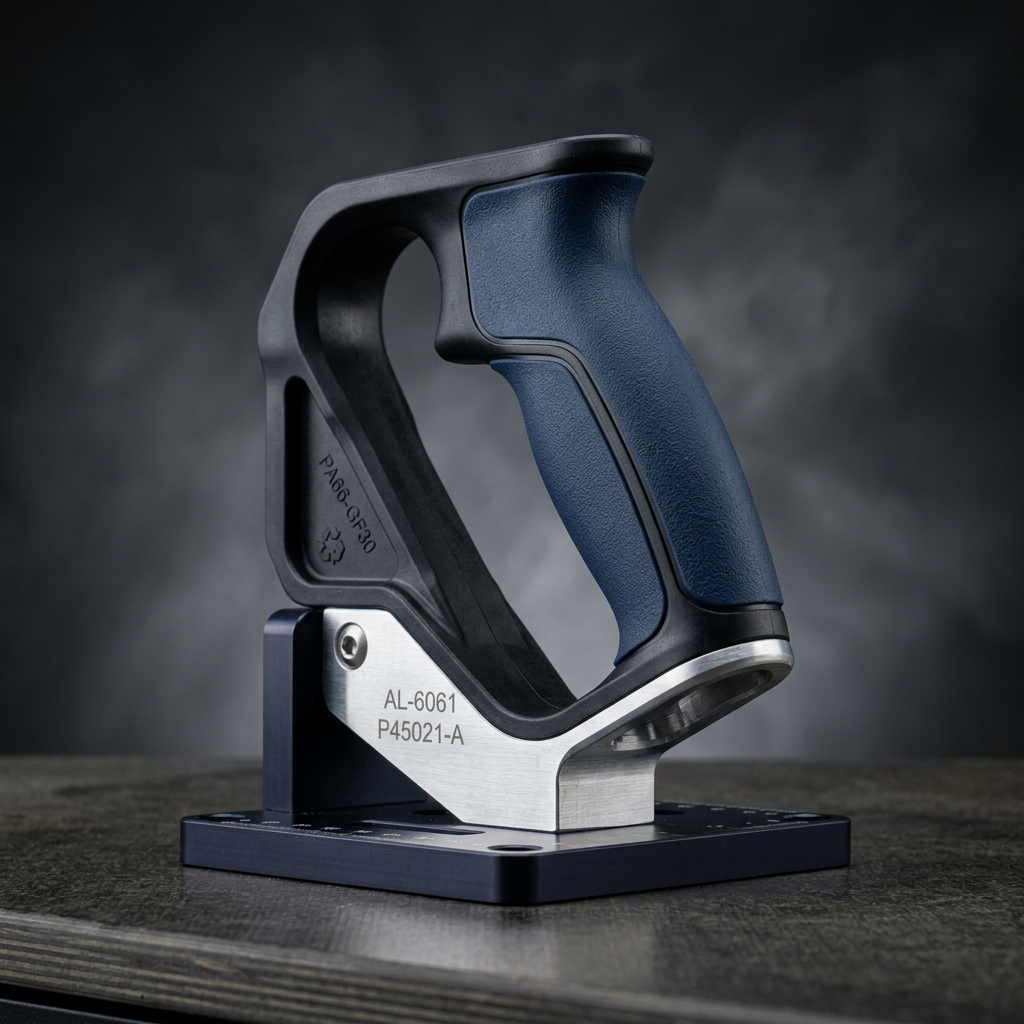
▲ Custom silicone overmolded onto metal inserts and rigid plastics produced by Jun-Hsiang
1. Strict Selection of Substrate Temperature Limits
Silicone curing temperatures typically range between 130°C and 175°C. Therefore, when overmolding silicone onto plastic, the rigid plastic substrate must withstand high temperatures, such as PC (polycarbonate), PA+GF (glass-reinforced nylon), PBT, or PEEK. Substrates with lower heat resistance (like ABS or PE) will easily melt or deform inside the mold.
2. Physical Surface Treatment & Activation
A perfect bond relies on a clean surface that allows mechanical interlocking. Before metal inserts (such as stainless steel or copper) are placed in the mold, they must undergo degreasing and oxide removal. Depending on requirements, sandblasting or plasma treatment is applied to increase micro-roughness, allowing the silicone to interlock physically.
3. Uniform Primer Application
This is the key to chemical bonding. Primer molecules possess dual reactive functional groups: one end bonds with the metal (or plastic) surface via intermolecular forces or covalent bonds, while the other end participates in the cross-linking reaction of the silicone during high-temperature curing. The primer thickness and drying temperature must be strictly controlled; too thick creates a brittle layer, while too thin results in weak adhesion.
4. Precision Mold Positioning & High-Pressure Control
During high-pressure injection, flowing silicone exerts a strong force on the metal or plastic inserts. If the mold positioning is inaccurate, the insert can shift by micrometers, leading to uneven wall thickness or exposed substrates. Additionally, the mold must feature efficient vacuum venting to prevent residual air at the bonding interface, which can inhibit the primer's chemical cross-linking.
Jun-Hsiang Enterprise has over 30 years of custom manufacturing experience. In our New Taipei City factory, we feature dedicated surface treatment areas and precision pull-testing equipment, allowing us to deliver the most reliable bonding quality and waterproof guarantees for complex multi-material assemblies.
Submit 2D/3D CAD Drawings for Quotation
Have a custom silicone or rubber project? Submit your 2D/3D CAD drawings (.STEP, .IGES, .DWG, .PDF) directly via email for evaluation and quotation. We execute mutual Non-Disclosure Agreements (NDA) prior to reviewing any proprietary engineering drawings.